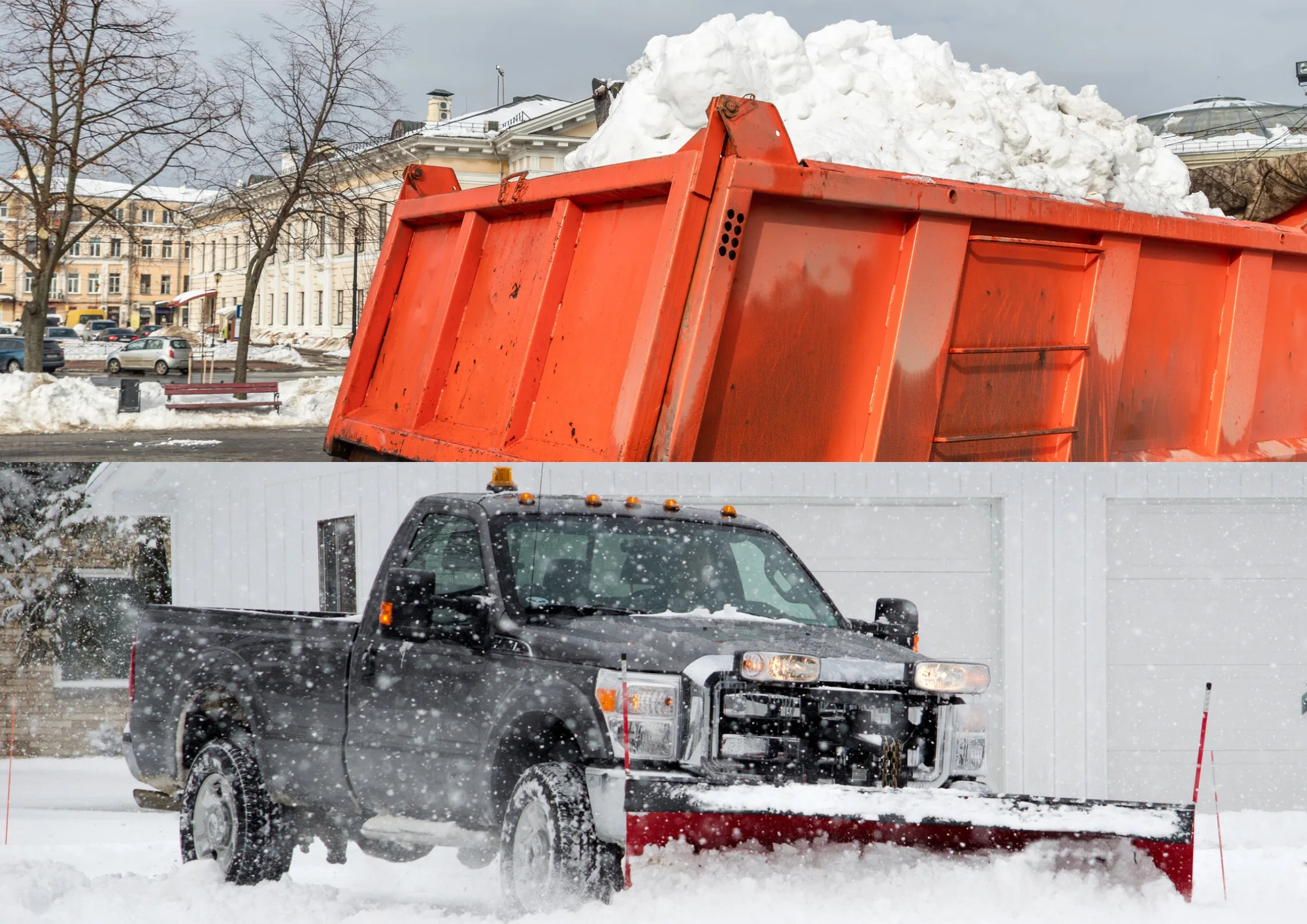
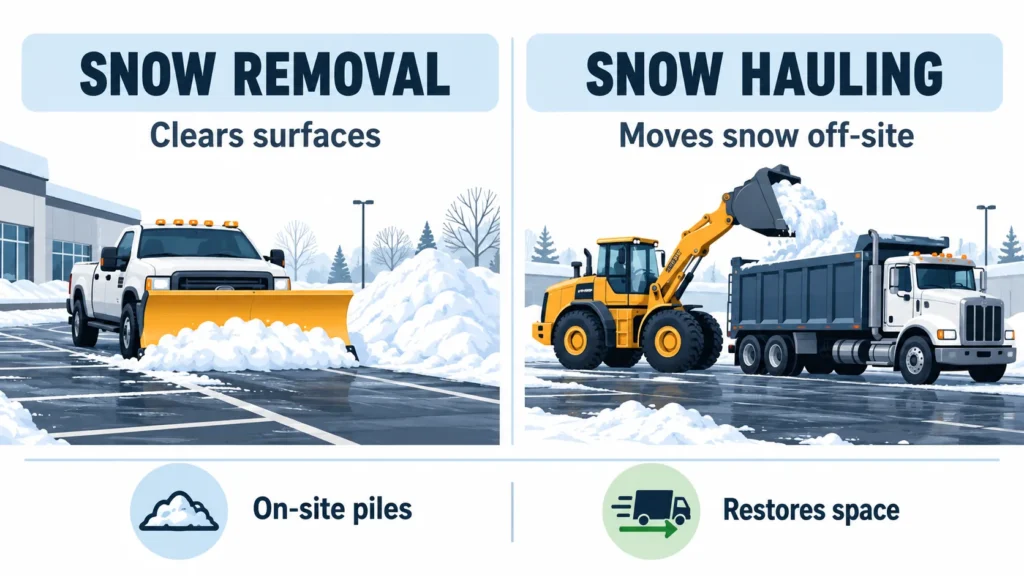
The difference between snow removal and snow hauling comes down to where the snow goes. Snow removal vs. snow hauling is more than a wording distinction: Snow removal clears active surfaces and typically relocates snow on-site, while snow hauling loads accumulated snow into trucks and transports it to an approved off-site location.
For Winnipeg properties, knowing the difference matters when parking areas, entrances, pedestrian routes, fire lanes, and storage areas have limited capacity.
What is snow removal? In routine service, it means clearing driveways, parking lots, walkways, entrances, lanes, and access points with equipment suited to the property and snowfall. “Snow removal” generally includes surface clearing and on-site relocation, so snow is moved into designated piles rather than automatically transported away.
Snow hauling begins when those piles no longer work safely or efficiently. “Snow hauling” means off-site removal: A loader moves accumulated snow into trucks for transport to an approved destination.
A seasonal snow-removal contract may include clearing without hauling, so confirm exactly what is included before winter. The choice between snow plowing versus snow blowing can also depend on the surface, available storage space, snow volume, and equipment required.
| Detail | Snow Removal | Snow Hauling |
|---|---|---|
| Where Snow Goes | Piled on-site | Taken off-site |
| Main Goal | Clear usable surfaces | Restore space and access |
| Common Equipment | Plows, shovels, and snowblowers | Skid steers, loaders, and trucks |
| Typical Timing | After snowfall | When piles affect operation or storage |
| Cost Basis | Service area, snowfall, and visits | Pile size, equipment, truckloads, distance, and disposal |
For a small lot, a snow placement on small lots plan helps keep piles away from routes, entrances, sightlines, and drainage points.
Hauling becomes practical when on-site piles create a safety, access, capacity, visibility, or drainage concern. A haul-out crew consolidates snow, loads it into trucks, transports it to an approved location, and restores the space the pile occupied.
There is no universal pile height or snowfall total that automatically requires hauling. A more useful trigger is whether the property can continue operating safely and efficiently before the next snow event.
After a major snowfall, inspect exits, crosswalks, accessible stalls, fire lanes, loading areas, waste enclosures, catch basins, and pedestrian routes. Consider:
One badly placed pile can hide pedestrians near a crosswalk, narrow a loading turn, restrict sightlines, or remove visitor parking. Condo, retail, and industrial properties may need a faster haul-out response than a detached home with adequate side-yard storage.
Winnipeg properties also need to distinguish private-property snow management from public rights-of-way. Private snow should not simply be pushed into a street, onto another property, or into an area that isn’t authorized for snow storage or disposal. City of Winnipeg snow-clearing operations address public infrastructure, while property owners and contractors remain responsible for appropriate snow management on private sites.
When comparing plans for snow removal services in Winnipeg, with snow hauling services in Winnipeg add-ons, consider storage capacity, access, sightlines, and the response needed to keep the property operating. Professional snow removal versus city plows explains the different roles of private snow services and municipal clearing.
Narrow lots, shared lanes, condo visitor lots, and corner properties can run out of safe storage quickly. Before winter, identify storage and no-storage zones around entrances, exits, fire lanes, accessible areas, drains, and loading spaces.
Snow shouldn’t be piled where it blocks pedestrian access, obstructs entrances, reduces visibility, covers drainage infrastructure, or creates a path for meltwater to cross a walkway or driving surface.
Winnipeg's freeze-thaw conditions make drainage an important part of snow planning. When accumulated snow melts during warmer periods and temperatures fall again, water around catch basins, entrances, ramps, and low points can freeze. This can create slippery conditions and make previously manageable snow piles a larger access or safety concern.
A clear service scope should identify:
For a Winnipeg snow removal cost, service area, snowfall conditions, equipment, and visit frequency can affect pricing. A Winnipeg snow hauling cost can also reflect pile size, loaders, trucks, truckloads, access, hauling distance, disposal requirements, and operating conditions.
Professional snow cleaning benefits include having a plan that accounts for current conditions while preparing the property for the next storm.
Snow removal and snow hauling involve different equipment and workflows. Plows and snowblowers are useful for clearing active travel surfaces, while skid steers and front-end loaders can consolidate larger piles and load trucks for haul-away work. Tandem dump trucks provide additional hauling capacity when on-site storage is no longer practical.
The Winnipeg fleet used by Cleanr Property Maintenance includes skid steers, front-end loaders, and tandem dump trucks, providing equipment for routine clearing, pile management, and larger snow-hauling operations. The company also uses 24/7 storm tracking to monitor winter events and plan around changing conditions.
Hauling should also be kept separate from de-icing. Clearing snow doesn’t automatically eliminate every traction issue. Compacted snow, ice, freezing temperatures, and refreezing meltwater can still create slippery surfaces after plowing or hauling. Depending on site conditions, a separate de-icing or traction-treatment plan may be necessary.
For commercial properties, effective winter management isn’t simply about moving snow once. The goal is to maintain usable routes, parking capacity, loading areas, pedestrian access, and safe operating conditions throughout the season.
A Winnipeg snow plan should identify which areas are private property, which routes connect to public rights-of-way, and where snow can safely and appropriately be stored.
Before winter, identify:
This planning is particularly useful during Winnipeg's freeze-thaw cycles. Snow pushed toward a drain, entrance, ramp, or low point can produce meltwater that later refreezes when temperatures drop. Large piles can also remain wet underneath even when surrounding pavement appears clear.
Moving accumulated snow before it creates drainage, visibility, parking, or access problems can be more practical than waiting until the property has lost significant usable space.
For properties that regularly exceed their available storage capacity, establishing a haul-away trigger before winter can make operations more predictable during major storms.
Commercial properties need to account for more than the initial clearing of driving and walking surfaces. Snow-storage capacity, parking demand, loading schedules, emergency access, and operating hours can all affect when hauling becomes necessary.
A practical plan can establish when accumulated snow will be consolidated, when a haul-out should be requested, which areas receive priority, and how additional truckloads or disposal charges are authorized.
Equipment should match the property's layout and snow volume. Smaller equipment may be appropriate for confined areas, while front-end loaders and tandem dump trucks can support larger pile removal and transportation requirements.
The same planning should account for de-icing. Clearing a parking lot does not necessarily eliminate ice or refreeze hazards, particularly around entrances, shaded areas, slopes, drains, and pedestrian routes.
Light residential clearing can suit a small home, but it cannot restore a commercial lot's lost capacity or move a large consolidated pile off-site. A DIY versus professional snow removal decision becomes more important when equipment, timing, storage limits, and dependable follow-through affect winter operations.
Cleanr Property Maintenance can assess priority routes, parking areas, loading zones, storage locations, and practical haul-out triggers for Winnipeg properties. Its fleet includes skid steers, front-end loaders, and tandem dump trucks, supported by 24/7 storm tracking for changing winter conditions.
When requesting a quote, provide pile locations, entrance widths, turning space, operating hours, priority areas, and any locations where snow cannot be stored. This information helps establish whether routine removal, pile management, de-icing, scheduled hauling, or a combination of services is appropriate.
Connect with Cleanr Property Maintenance to plan snow removal and hauling around your property's storage capacity, access requirements, and winter operating needs.


